BY: DIGITAL WAX MEDIA STAFF
Over the past few decades, technology has advanced by leaps and bounds. These technological achievements have affected essentially every facet of how we go about our business, from shopping, to communicating, to consuming entertainment.
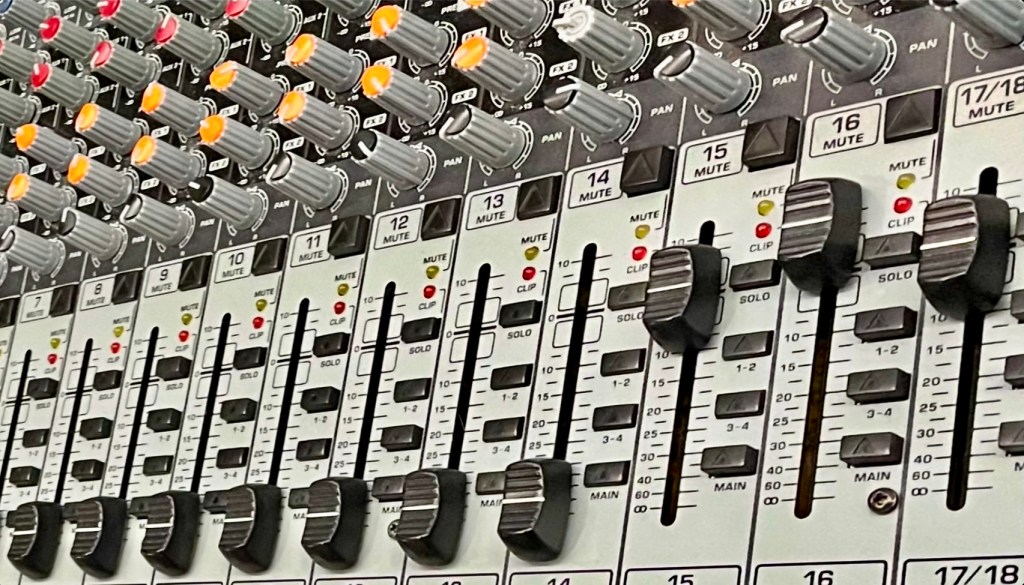
While the film industry has evolved around the advancement of CGI, the music industry has likewise passed through doors opened by the development of new editing and recording software. These advancements are invaluable in making refinements to a piece of work with the goal of obtaining a particular sound. But in consideration of the art itself, is the expression diluted beyond a certain threshold of electronic interference? Furthermore, can an artistic statement maintain credibility if it has been altered after the fact?
In the times before streaming, the re-release of an album was a hefty undertaking. New copies had to be manufactured – be they CDs, cassettes, or vinyl records – and distributed, and they then had to sell enough units to justify the re-release itself. Album re-releases, as per what has become standard procedure for big-name records, generally entail technical changes such as remastering or remixing, as well as the addition of leftover songs from the album sessions which are tacked on the end of a record and designated as bonus tracks.
Substantial organization had to go into these processes for decades, but procedures such as these have been rendered yet another casualty of the advent of streaming and technological developments. That isn’t necessarily to say that such advancements are a bad thing. Substantial time, money, and energy can be spared with just a few clicks of a button – we’ll avoid going down the rabbit hole that is artificial intelligence for the time being, as that is another article entirely. However, technological advancements have made things so simple in this regard, the folks in charge of the music itself now have a previously unheard of level of control over the art, even after it has gone out to the public.
Producer and rapper Kanye West has brought attention to this issue in recent years through his management of his own releases. His 2016 album The Life of Pablo was released on February 14th, though the rapper continued to work on the album after its release. On April 1st, 2016, West released an “updated” version of The Life of Pablo which featured substantial alterations to the original collection. The re-released version, intended to be recognized as the official album, was praised by critics for its updated mix, among other things. However, one would be remiss not to ponder the implications of the tampering of a project of this magnitude (in the first ten days of availability The Life of Pablo garnered 250 million streams). Such retroactive touchups would become commonplace for the rapper as his behavior became more erratic, a phenomenon reflected in the consistently alarming decline in quality and forethought which would seem to be put into subsequent album releases.
Many similar instances of post-release patching would occur on the heels of Pablo in the late 2010s, with rapper Young Thug’s 2019 debut, So Much Fun serving as one pertinent example. Track 3 of the album, the originally featureless “Ecstacy”, was altered post-release to include a feature from Machine Gun Kelly. Rapper/producer Travis Scott released his third album Astroworld in 2018. The track “Yosemite” featuring Gunna and Nav received attention for the nearly inaudible quality of Nav’s contribution toward the end of the song. As you can likely guess, this error was altered after the album’s release.
One of the most egregious instances of post-release album patching would come, unsurprisingly, from Kanye West during the promotional rollout for his 2021 studio album Donda. The rapper previewed the album a number of times in a live setting, regularly making changes between sets. This could be considered fair game at this point, as the project had yet to see an official release. Donda finally saw release on August 29th, 2021, and on September 28th, 2021, the album was released once more as an updated version apart from the original album, removing and replacing various features, and altering a number of mixes. The originally released version of the album was eventually removed from streaming services, leaving only the then-most recent update to stand as the official album. Then, on November 14, 2021, a “deluxe” version of the album was released. As opposed to the standard idea of a deluxe album as a version of an originally released album featuring a handful of bonus tracks, the “deluxe” version of Donda not only alters a number of existing tracks on the album, but adds others, not just at the end, but throughout the track list, altering the album’s sequencing considerably.
One could chalk such changes up to artist choice, but what type of precedent does this set? Should listeners even consume brand new music if the opinions they form upon first hearing the project are to be rendered null in days, weeks, months, or years? Could Paul McCartney rightly decide to go back and completely alter Abbey Road on a whim?
These post-release changes, while potentially well-intentioned at times, often have the feel of a bait-and-switch, as the album of which a listener is actively supporting and speaking fondly may not even be the same album in a day’s time. What of the implications of those prior opinions, and how would the industry go about addressing such an issue? Perhaps labels could implement some version of the approach taken by social media application Threads upon its introduction of an “edit” feature for posts – in the case of Threads, users are given a brief window following publication to apply any final edits to the content in question.
At the time of writing, it would appear that few artists seem to be truly digging into the possibilities of post-release album patching. This technology is in its infancy, however, and in the grand scheme of things, it is likely that we are only scratching the surface of the effects streaming will have on the music industry as a whole, particularly in that recording artists are no longer beholden to consumers’ physically owning a piece of media as a means of finding an audience for their work. Ultimately, it is up to artists and listeners alike to determine whether these tactics point to trouble, or offer yet another avenue for self-expression. One can be certain, however, that immense changes will undoubtedly be coming to pass within the music industry in the coming years as the possibilities offered by the increasingly rapid advancement of technology continue to multiply.



 Digital Wax