BY: DIGITAL WAX MEDIA STAFF
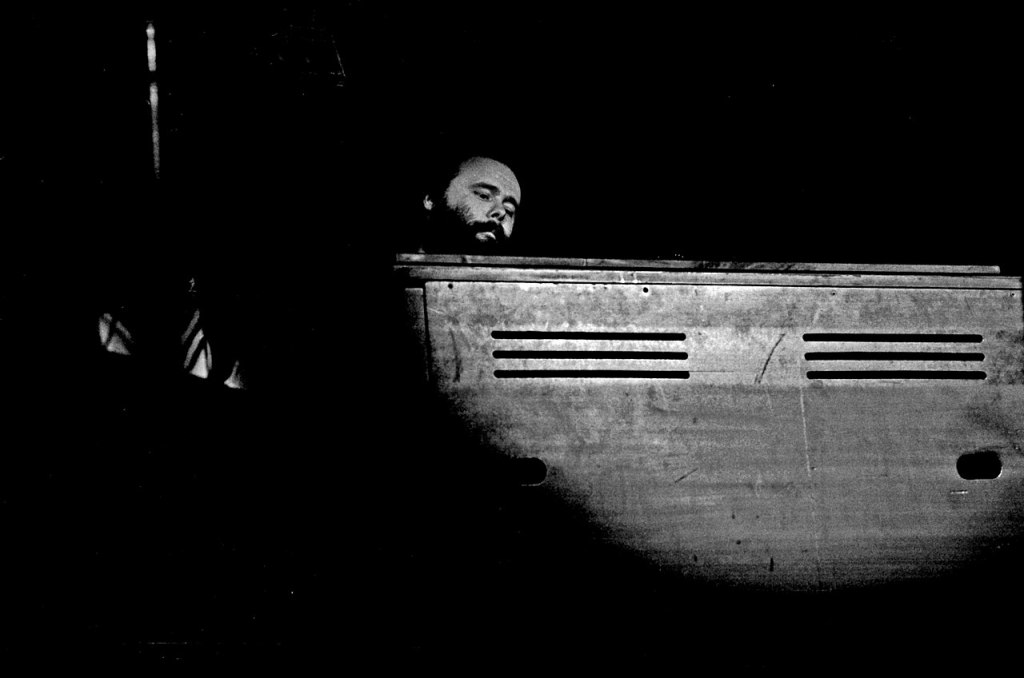
News broke on Tuesday of the passing of Garth Hudson, the last living original member of the monumentally influential Canadian-American roots-rock act, The Band. Known as much for his unassuming demeanor as for his virtuosic instrumental abilities, Garth Hudson was nothing short of force of nature in terms of his musical contributions to The Band and other projects throughout the decades. His passing follows that of composer, guitarist and songwriter Robbie Robertson following a battle with prostate cancer.
Fans, collaborators, and those influenced by Hudson expressed their sympathies upon learning of the development, with posts to various platforms propounding the profound impact of the man and his contributions to popular music throughout his lifetime.
“Today, we mourn the loss of a true legend. Garth Hudson,” read a statement shared to social media by The Band: A History, perhaps the foremost modern-day authority on the group’s legacy. “His innovative musicianship shaped not the unique sound of The Band, but inspired generations of musicians… his contributions transcended genres.”
Administrators of The Band’s own social media took time to pay tribute to Hudson as well
”Today, we sadly say goodbye to Garth ‘Honey Boy’ Hudson, the last living original member of The Band,” read the post, which additionally reiterated to Hudson’s status as, “A musical genius and cornerstone of the group’s timeless sound.”
The statement continued, “through his music, he [helped] us all feel more deeply and connect to something greater. Rest easy, Garth.”
The eldest, and arguably most grounded member of the five-piece collective, Hudson was prominently cited by other members of The Band during their lifetimes as having been the most musically advanced among them. Often spoken of with reverence by his fellow bandmates, group members revealed on multiple occasions that they would pay Hudson for music lessons early on in the band’s career.
Though he was most known musically for his prodigious skill on keyboard instruments – his work on the lowery organ having received significant praise – Hudson was a skilled multi-instrumentalist who contributed accordion and and various woodwind instrumental passages to recordings throughout the years.
The musician’s uncanny versatility was on full display for the recording of The Band’s classic, self-titled 1969 LP. From his seemingly effortless stride piano work on “Rag Mama Rag” to the wildly inventive and innovative recording of a clavinet through a wah-wah pedal in conjunction with the Lowery organ for “Up on Cripple Creek,” the consistent assertion of Hudson’s genius by those who knew and worked with him throughout the years would be nearly impossible to argue, not that anyone would ever want or need to challenge such a claim.
But the most impactful instance of Garth Hudson’s irreplicable musicality; the sonic footprint left by Hudson that provides a brief glimpse at the passion and enormous heart behind the virtuosity – in the eyes of this writer – comes at the closing section of “The Unfaithful Servant.” Here, Hudson can be heard performing a solo on soprano saxophone – a member of the saxophone family with a particularly distinct sound, which was utilized by jazz innovators such as Sidney Bechet, John Coltrane, and Steve Lacy – backed on tuba by producer John Simon.
Here, Hudson’s rich and emotive playing perfectly encapsulates the aching melancholy of the lyric and arrangement of “The Unfaithful Servant.” It’s a performance that taps into something deeper than musical performance, eclipsing the context of the circumstance of its own creation and evoking a universal understanding that feels as old as time itself.
In many musical ensembles there is one member frequently cited as, “the quiet one.” Garth Hudson is the only member of The Band never to take a lead vocal on a track. He was always content to remain at the side of the stage providing rich and textured support for the work of his band mates and brothers. To the best of this writer’s knowledge, Garth Hudson had never been known to speak ill of anyone during his time on this earth – which one might argue is particularly indicative of the character of the man given the degree of mud-slinging which has gone on over the years with regard to the group’s inner workings.
Despite his status as the eldest member of The Band, the organist would outlive each of his original brothers and bandmates, passing away at the age of 87. Not unlike the group for which he is most remembered, Garth Hudson’s legacy and contributions to popular music as it is known today will forever be cherished, and in that sense, the man himself lives on indefinitely in the hearts of fans and listeners.
Those interested in learning more about the life and music of Garth Hudson, as well as the timeless work of The Band, are encouraged to explore The Band: A History.


 Digital Wax