BY: CHRISTOPHER BROWN
Wandr is my new international travel series. The first time that I ever traveled internationally was to Vietnam in 2016. Back then, I wrote Facebook travel logs about my experiences, so I dug through my Facebook archives and found the original posts. I was a terrible writer then, so these posts were poorly written.
I thought I’d start this new international travel series by revitalizing those old posts, giving them better formatting, more detail, and my latest insights. As a disclaimer, there are many details that I’m intentionally still leaving out. My first trip to Vietnam was nearly nine years ago, and it was only the first of many trips that I’d take there. This article is the first part of multiple parts that will be coming out in the future.
For those of you who don’t know, my wife, Venus, is Chinese-Vietnamese and is from Ho Chi Minh City, Vietnam. We met while she was still an international student at university. Today, she’s an American citizen, but her parents and little brother still live there.
A year before we got engaged, I traveled to Vietnam with my wife to meet her parents. I purchased my first passport and got it stamped with a Vietnamese visa. I had never been on an airplane, let alone outside of the United States. My first experience was on the other side of the world.
As someone who had never been out of the United States, I was an inexperienced and naive traveler who had no idea what to expect. I was uncultured, and I knew little to nothing about Vietnam at the time. I’ve since learned so much about Vietnam and traveling in general. Vietnam immediately stole a piece of my heart that now belongs to it forever. My soul is content there.
The flight to Vietnam is long and expensive. The round-trip cost per person is between $1,200 and $1500. We usually book our trip months in advance to get the lowest price. It’s a 17-hour flight from the United States to Tokyo-Narita airport in Japan. From there, it’s an additional 6.5-hour flight to Ho Chi Minh City, Vietnam, totaling nearly 24 hours’ worth of flight time. When you take a flight that long, two meals are included, as well as free alcoholic drinks, movies, and TV.
The layover in Japan quickly became one of my favorite things about this long journey. The airport has a lot of great Japanese restaurants and unique shops. All of the bathrooms have heated bidet toilets that play music while you do your business. Those bidets changed my life. If you’ve never used one, you don’t know what you’re missing. I immediately purchased a bidet for my home when I returned.
My favorite place to eat in the airport was a small sushi restaurant that had six sushi chefs taking the lead from their master sushi chef. Authentic Japanese sushi and a pint of Asahi, Japanese beer, was something that I always looked forward to. Since then, international flights have been moved to a different terminal, making it impossible to visit that sushi spot. I stopped there for sushi every time I had a layover in Japan. I miss it dearly.
In most Asian cultures, the proper etiquette is to bring a gift when visiting someone, so after having sushi, we stopped at one of the Japanese shops to buy some Royce chocolate, the most delicate, melt-in-your-mouth, decadent chocolate that you can imagine. Stopping to buy Royce chocolate has become a tradition, whether I’m traveling to Vietnam or returning home.
After landing in Vietnam, going through Vietnamese customs was seamless. We retrieved our bags from the baggage claim area and walked out of the airport. The heat and humidity hits you before you even pass through the door. When you get outside, it feels like you’ve just stepped into a nice, warm bath, even at night time. Venus’s parents are always there to greet us and pick us up. We landed at 11 pm, so we took a taxi back to their house. Her mom had some chicken and rice ready for us to eat when we arrived. We had some food and went to sleep for some much-needed rest.
Day 1: December 22nd, 2016 – Ho Chi Minh City
Venus’s parents live in District 5, which is a Chinese district. They live in a five-story house. Houses in Vietnam are different. It’s an urban city, so houses are built vertically and are side-by-side. The first floor of everyone’s house is usually the location of their business.
Vietnam is a socialist country, but economically, it feels very capitalist. Vietnamese people work hard for what they have, working long hours every day of the week. Venus’s parents own a large egg distribution business, so the first floor of their house is their business headquarters. The other four floors are their living quarters.
We woke up and went downstairs to a bustling business. Her dad took us to have breakfast. The primary form of transportation in Vietnam is motorcycles. Motorcycles outnumber cars three to one, maybe more. In a city of 10 million people, the streets are full of motorcycles that fill the streets and weave around like little ants. At times, the traffic can be complete madness. Crossing the road on foot is sometimes a challenge. The second best form of transportation is to take a taxi. Venus is a great motorcycle driver, and I have no experience driving one, so I usually ride with her, her dad, or her brother.
My first breakfast in Vietnam was Chinese dim sum and tea. This was my first time having dim sum, and it’s been a staple in my life ever since. After having breakfast, Venus and I took a 20-minute ride to District 1. This is the heart of Ho Chi Minh City. It’s the central district that is known for its significant historical landmarks, shopping, skyscrapers, consulates, restaurants, bars, hotels, and much more, making it a tourist hot spot.
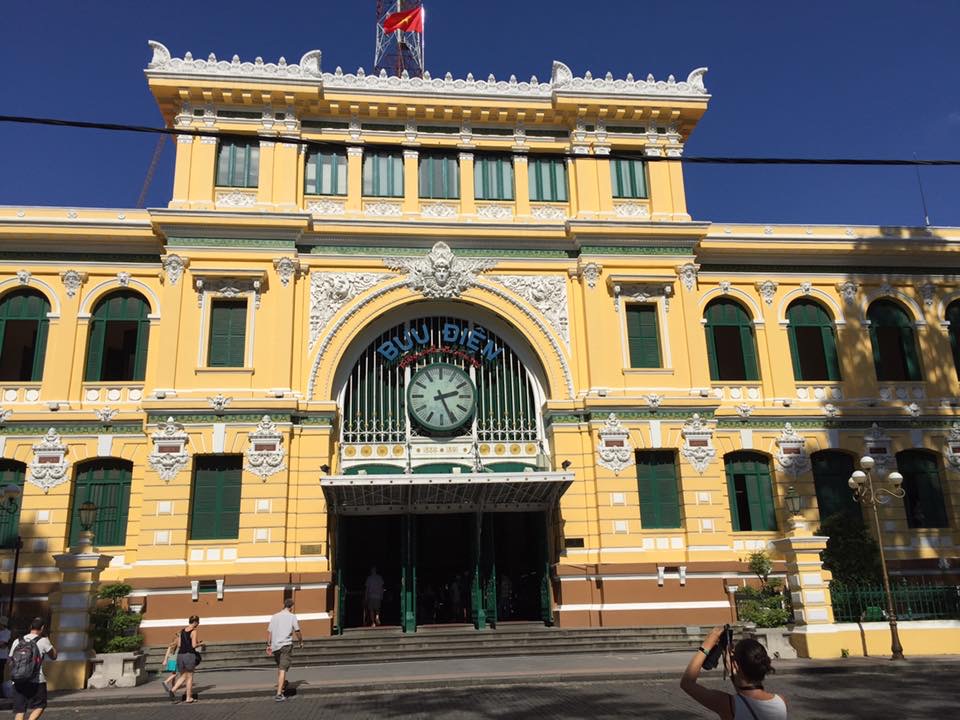
We explored District 1 on foot, visiting all of the historical landmarks, like the Notre-Dame Cathedral, Saigon Central Post Office, Ho Chi Minh City Hall, Saigon Opera House, and the Independence Palace.
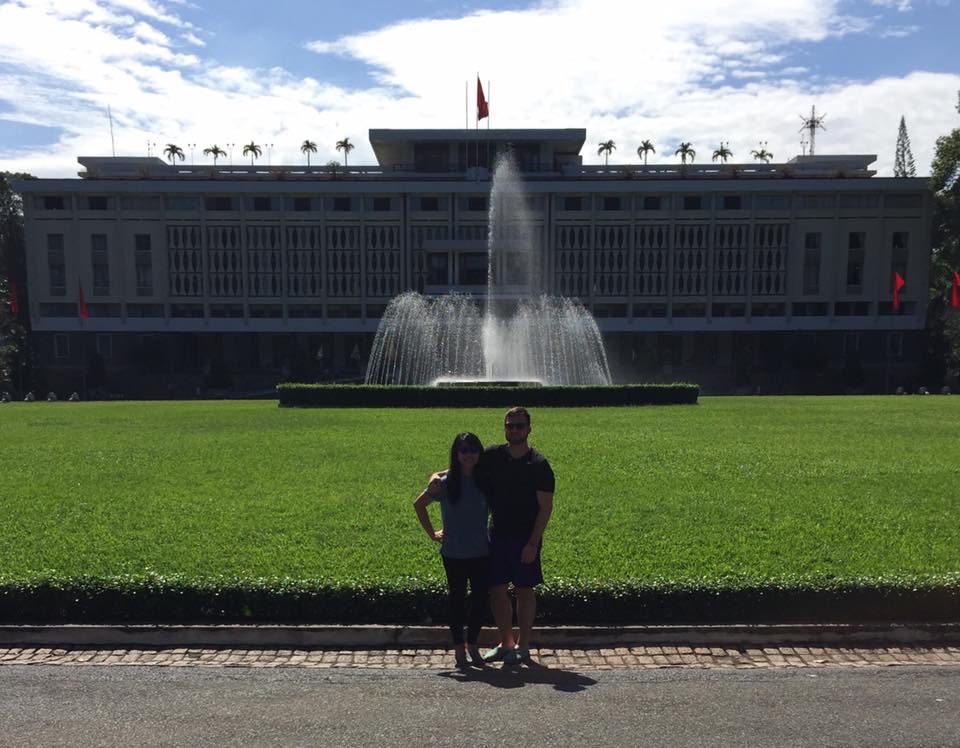
The Independence Palace is where the South Vietnamese President resided during the Vietnam War. This is also the site of the Fall of Saigon, the end of the war, when Northern Vietnamese Army tanks crashed through the palace gates. The tanks are still there on the grounds. It’s surreal to see historical places like this today, considering the infamous history of the Vietnam War.
We also visited the War Remnants Museum, which has many exhibits, including military equipment, such as guns, bombs, helicopters, and bomber planes. Another exhibit includes graphic photography taken during the war that displays the heinous war crimes committed by both sides and the effects of Agent Orange, napalm, and phosphorus gas. This museum is a heavy place to visit, but it’s worth it to remind us that things like this should never happen again.
I’m a Rage Against the Machine fan, so we had the taxi driver take us to the exact location where the monk, Thích Quảng Đức, burned himself alive as an act of peaceful protest against the oppression of Buddhism in 1963. The famous photo taken of him engulfed in flames is on the cover of their self-titled album.
The weather is unforgiving. It’s 90-100 degrees during the day and 80 degrees at night, with a constant 90% humidity at all times. To get out of the heat and cool off a bit, we went to Kem Bach Dang, an ice cream shop that serves ice cream inside of coconuts topped with tropical fruits.
The food in Vietnam is amazing (and cheap). Vietnamese cuisine is always a spiritual experience. The dishes are usually rice/noodle-based with seafood or lean meats like pork. They use a unique blend of flavors and textures with a prominent use of herbs, spices, and aromatics.
When Vietnamese families and friends go out to eat at a restaurant together, they usually order many dishes for everyone to share. The men like to fight over who gets to pay for the meal, mostly for their ego. It’s a way to. Tipping is not a thing at restaurants in Vietnamese culture. The coffee/cafe culture in Vietnam is booming. Vietnamese people love coffee and regularly go to cafes to hang out with their friends. I wish Americans did this more.
The French occupied Vietnam for nearly 66 years, leaving a huge influence on the Vietnamese people. This is also likely where the huge coffee culture came from. One of the most popular Vietnamese dishes, Banh Mi, is made with French baguette bread. You can also see French influence in a lot of the architecture. When it comes to religion, the two most prominent religions here are Buddhism and Catholicism.
I know I already mentioned the traffic, but, my god, it is insane. I had never seen so many motorcycles in my life. I’m convinced that Vietnamese people are some of the best drivers in the world. I have no idea how there aren’t hundreds of accidents every day.
They use their horns constantly, and a second never goes by without hearing a honking sound. They do this to alert their fellow drivers of their proximity. The city is alive and energetic, constantly flowing with movement and activity. The sounds, sights, and smells are all pleasantly overwhelming. Ho Chi Minh City is enormous, and like the United States, it has both upscale and lower-income areas.
The language barrier can be tough. A lot of people speak English in District 1, but when you leave that area, it becomes more difficult to communicate. Luckily, Venus and her brothers translate for me, but I wouldn’t recommend leaving District 1 without learning a little Vietnamese or having a translator.
I feel like I attract a lot of attention when in District 5, partly because foreigners rarely venture that deep into Ho Chi Minh City, but also because I’m told that Vietnamese people are sometimes fascinated by how tall and big Americans are. The locals have all been so pleasant and welcoming. Some of them go out of their way to wave to me from across the street or say “hello”.
Day 2: December 23rd, 2016 – Ho Chi Minh City & The Mekong Delta
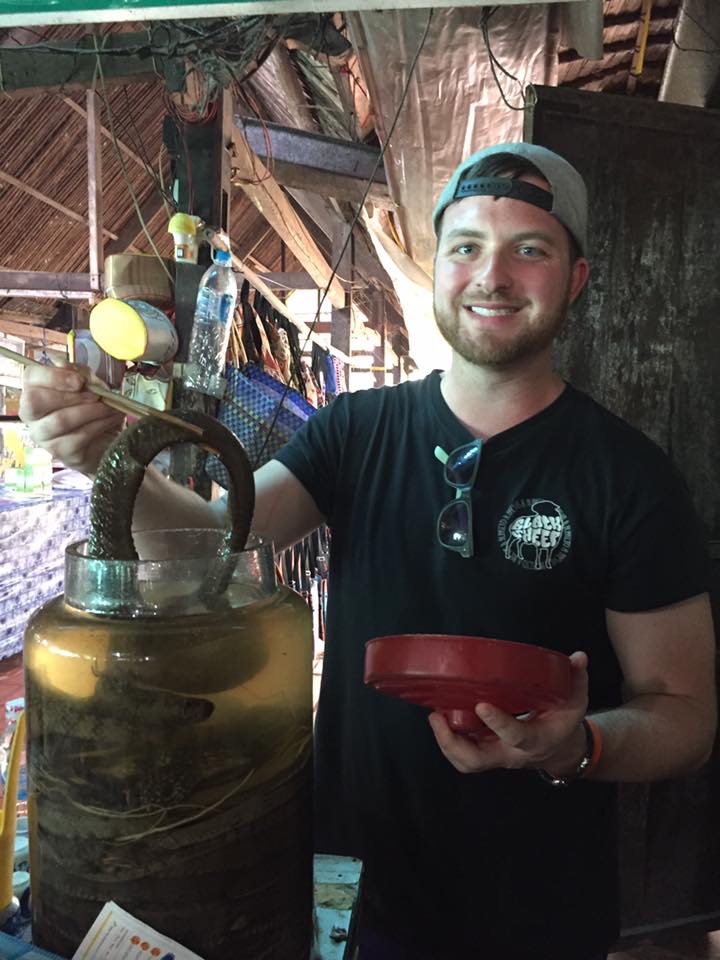
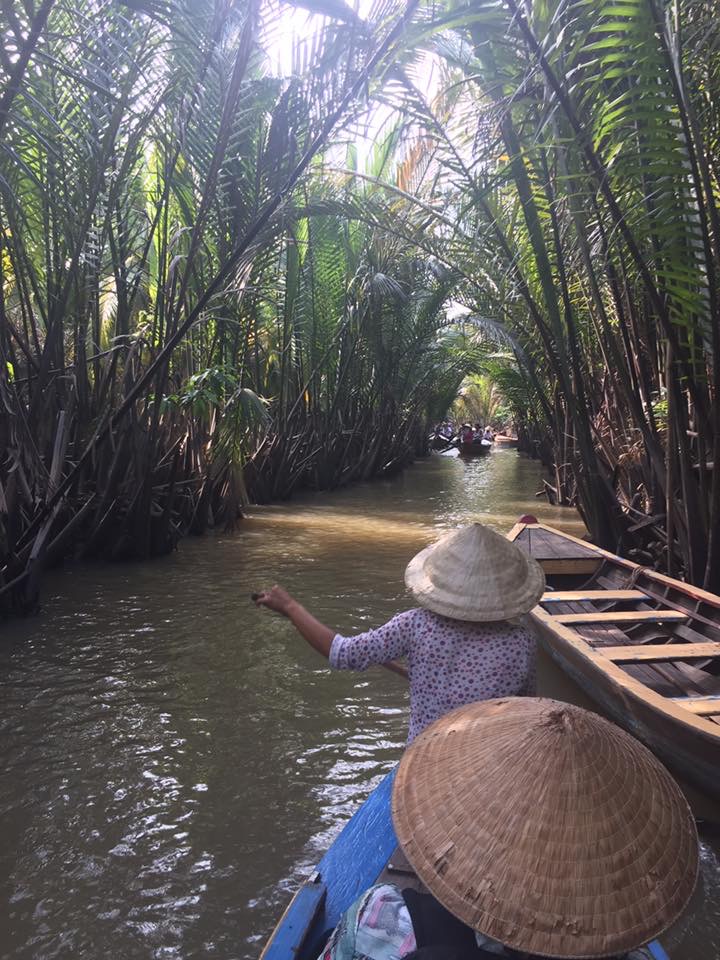
We had xoi for breakfast. Xoi is sticky rice topped with egg and Vietnamese bologna wrapped in a banana leaf. You unwrap the banana leaf and use a spoon to eat the filling. Her brothers had planned for us to go on a quick day tour to the Vietnamese countryside, so we hopped on a bus and went to My Tho, a small city in the Mekong Delta. Our first stop was to see a Buddhist temple. We then traveled to the Mekong River and took small boats to visit the surrounding islands on the river. Each island has a different experience. We drank vodka that had been aged in a jar with at least 10 snakes (still in the jar). We watched how handmade coconut candy is made and had homemade coconut liquor.
We fed alligators with red meat on bamboo fishing poles and ate alligator meat. We rode bikes along one of the islands, held bee hives with bees still on them, and ate the honey. We held python snakes and took small canoes through the jungle. Before taking the bus back home, we ate fresh mango and dragon fruit while listening to locals play/sing traditional Vietnamese music. It was a good day.
Day 3: December 24th, 2016 – Ho Chi Minh City & Cu Chi
Jet lag was starting to hit me like a bag of bricks. Vietnam is 11-12 hours ahead of US Eastern time. My body was confused. I was exhausted, but there was no way I was going to let that hold me back. We had booked a half-day tour to see the Cu Chi Tunnels. The Cu Chi Tunnels are located in the Cu Chi District of Ho Chi Minh City. They are part of an immense network of connecting tunnels that were used by the Viet Cong during the Vietnam War.
They were used as hiding spots for combat, supply routes, living quarters, and more. This was the definition of Guerilla warfare. Some American soldiers, known as “Tunnel Rats”, were sent into the tunnels to find the Viet Cong. These tunnels were a nightmare for the Tunnel Rats, as they were insanely small, pitch-black, and had bamboo traps waiting for them. Our tour took us down into and through some of the tunnels to see what it was like. The land around Cu Chi has many post-war remnants, like B-52 bomb craters.
The tour bus brought us back to District 1, where we spent the rest of the day further exploring. We went to popular shopping spots like Saigon Center (Takashimaya), a huge Japanese-owned shopping mall, and Saigon Central, a flea-market-style shopping center for clothing. One of the most famous and iconic spots in Ho Chi Minh City is Ben Thanh Market. It’s known as one of the oldest surviving structures in the city and is an important symbol of the city’s resilience.
Ben Thanh Market is also a flea-market-style market with over 1500 booths/vendors selling everything from clothes, shoes, food, purses, jewelry, and much more. Most of the items here are imitation knock-offs of popular brands that are nearly identical and under half the price. Shopkeepers here are also always ready to bargain.
After shopping, it was time for beer. Vietnam has its own domestic beer brands, like Tiger, Bia Saigon, and 333. These beers are all very light lagers and are usually served warm in the can, along with a glass of ice. In 2016, Ho Chi Minh City had a small but growing craft beer scene. I had looked up breweries in Ho Chi Minh City and found only a few at the time.
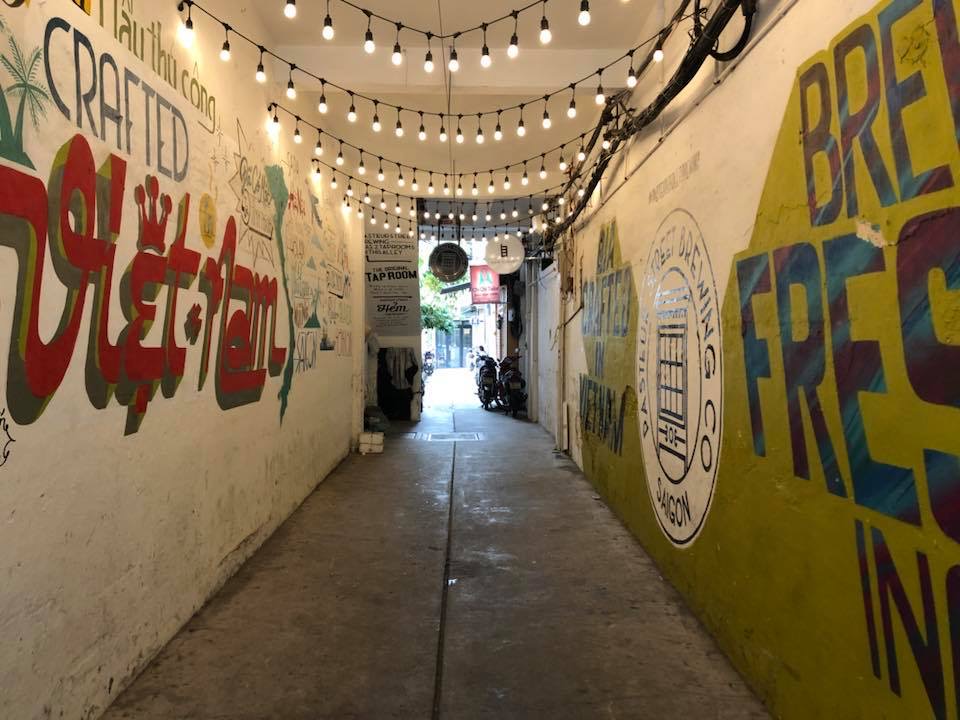
The Heart of Darkness Brewery, an Australian-owned craft brewery, and Pasteur Street Brewing Company. Pasteur Street Brewing had only been open for two years. It was located down a small alleyway that was decorated with cozy Edison bulbs and artwork on the walls. We walked up a small set of stairs and found the tiny tap room on the second floor. The entire aesthetic of this brewery won me over instantly. Their beer? Fantastic. Classic craft beer styles, some using Vietnamese ingredients like lemongrass, jasmine flowers, and passionfruit. That was the moment that I fell madly in love with Pasteur Street Brewing. It had become one of my favorite places on earth.
Day 4: December 25th, 2016 – Ho Chi Minh City
Christmas in Vietnam is different. Vietnamese people don’t celebrate Christmas like Americans do. They don’t exchange Christmas gifts or have Christmas trees in their houses, however, the streets and shopping malls in District 1 are decked out with Christmas decorations and extravagant lights.
To celebrate, we went out for a nice dinner with Venus’s family in District 1 at a five-star buffet. They had all-you-can-eat prawns. At the time, I absolutely loved prawn. I overindulged on them that night and found myself throwing up in the middle of the night. It was one hundred percent worth it, but I did lose my taste for prawns that night.
Day 5: December 26th, 2016 – Hue
We woke up early and took a taxi to the airport. I had rallied after my night of vomiting. We were going on a tour to central Vietnam. We landed in Hue. The weather in central Vietnam is much more forgiving, averaging 70-73 degrees. For breakfast, we had Bun Bo Hue. It’s the staple noodle dish in Hue, consisting of rice noodles, sliced beef, and herbs in a spicy pork broth. After breakfast, we set out on our tour, first visiting the oldest Buddhist temple in Vietnam.
Hue was the home of the imperial Nguyen Dynasty, the final imperial dynasty in Vietnam that lasted for 143 years with a total of 13 kings. They had built an Imperial City with the Golden Palace in the city center. The imperial city is mostly square and is surrounded and protected by six miles of tall, thick walls, multiple moats and fortresses, and 13 total gates that lead to the Golden Palace. We were able to tour the beautiful grounds of the Imperial City.

After the tour, we explored the city of Hue both on foot and by taxi. We finished the day by having Bun Bo Hue again with the local beer, Huda, for dinner. This is my happy place. The most simple yet organic and fulfilling experience of eating hot, spicy soup, surrounded by the sounds of horns and motorcycles while sitting in a small plastic chair on the side of the street on a hot Vietnam night.

Day 6: December 27th, 2016 – Hue & Quang Binh
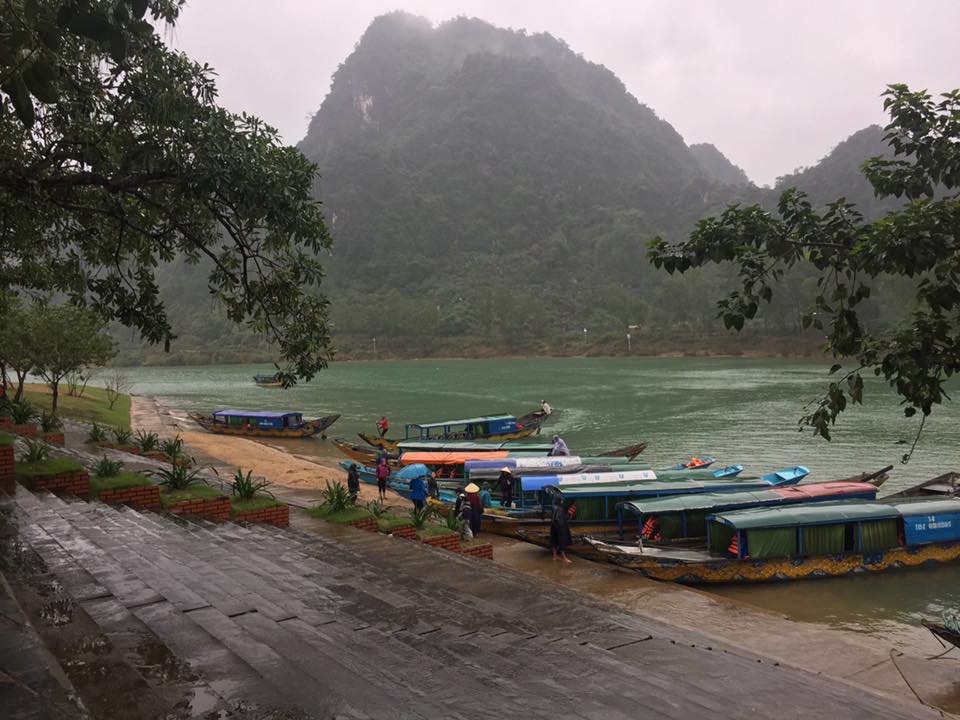
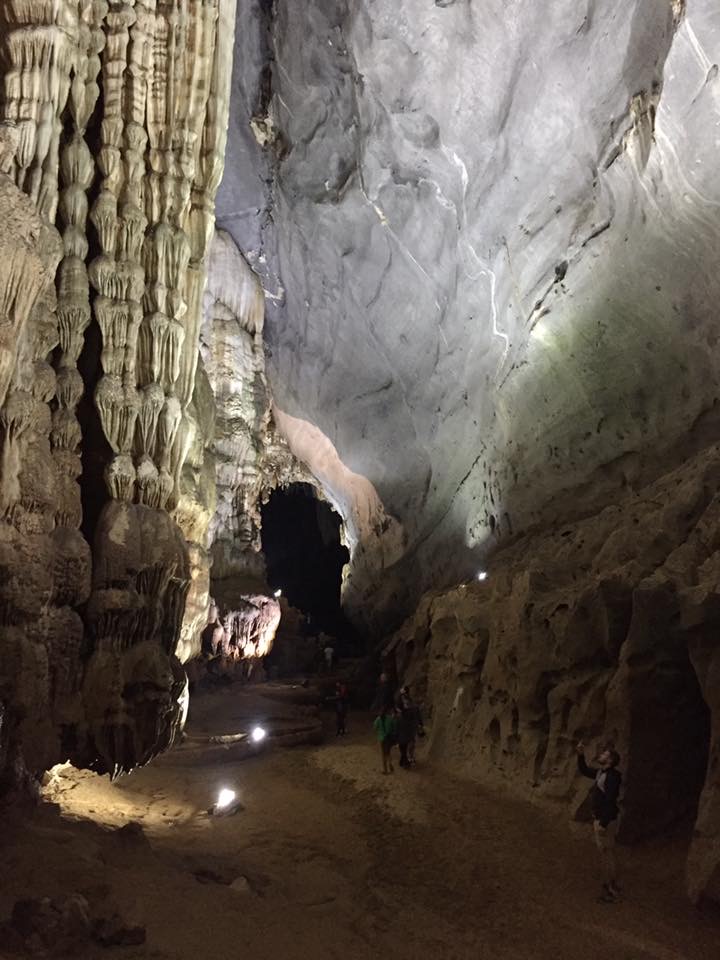
We took a bus from Hue to a smaller city named Quang Binh. The locals took us in a boat across the river to Phong Nha Cave, voted as one of the most beautiful caves in the world. It’s a huge cave system with an underground river and lake, featuring beautiful rock formations all highlighted with colorful lighting.
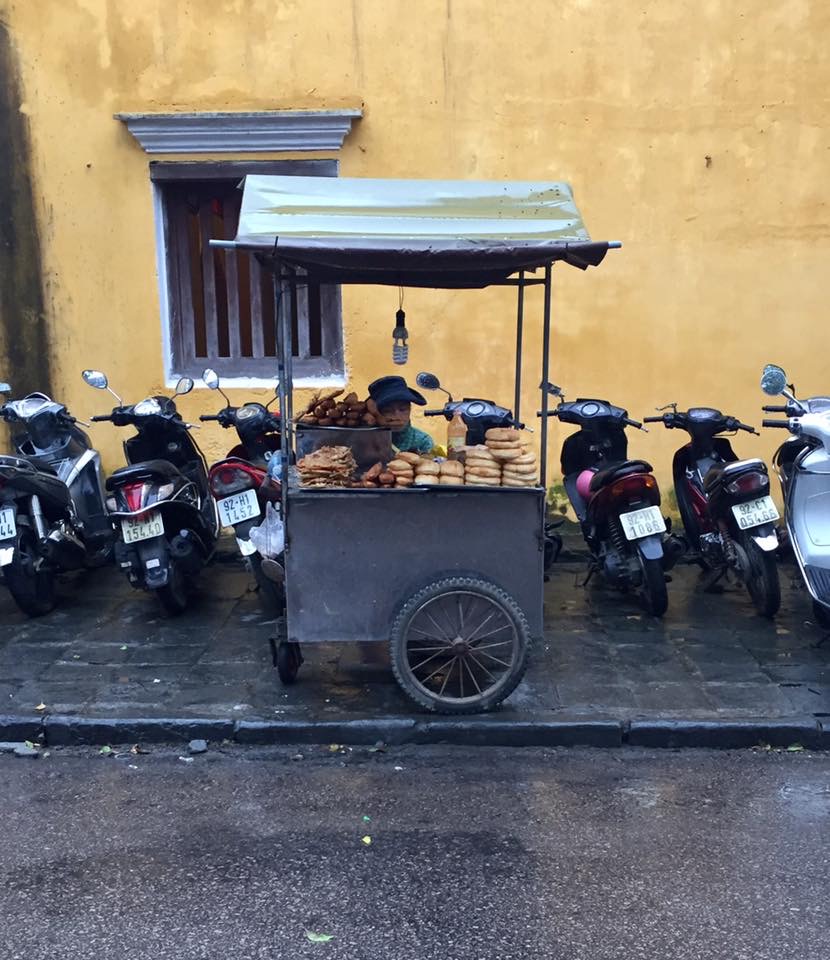
Afterwards, we came back to Hue to have one last bowl of Bun Bo Hue and street food. Street food is prominent in Vietnam. Street vendors serve many different dishes from their food carts, and it is some of the best and cheapest food you’ll ever have.
Day 7: December 28th, 2016 – Da Nang
We took a bus from Hue to Da Nang. Da Nang is the fifth-largest city in Vietnam. It’s a coastal/beach city that lies on the South China Sea. We checked into our hotel and went to the beach, took a nap, and then went to Asia Park, the largest amusement park in Asia. The park is gigantic, but for some reason, there weren’t many people in the park on this day, so it felt like we had rented the entire park just for ourselves, with no lines to get on the rides. After we left Asia Park, we had super fresh seafood as a pre-dinner appetizer.
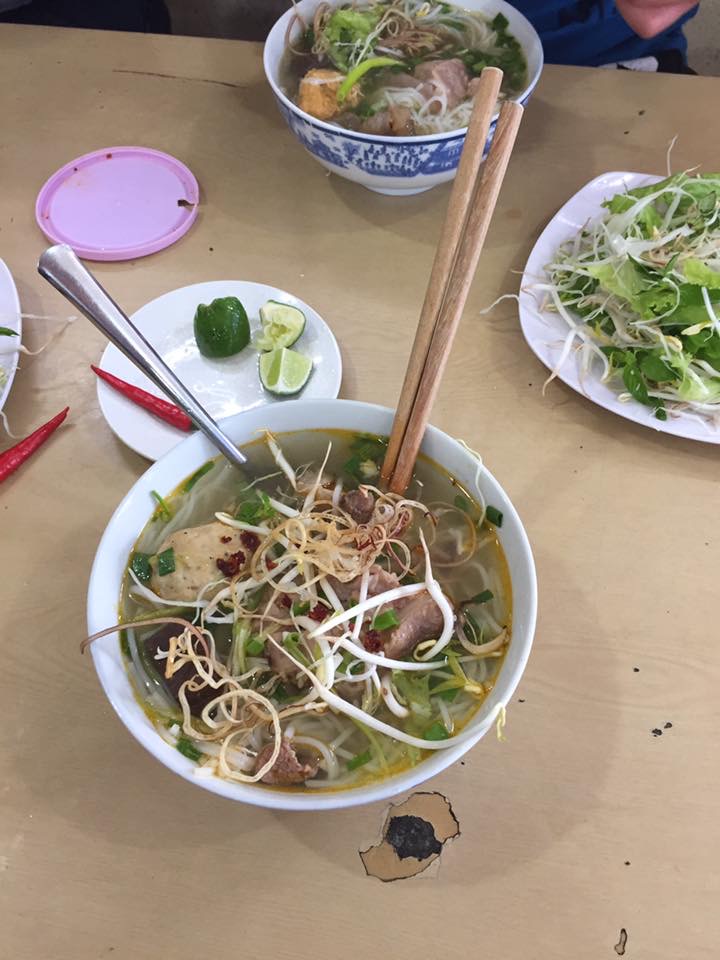
In Vietnam, many of the seafood restaurants let you choose the exact fish/shellfish that you want while they’re still alive in tanks. They weigh them and then cook them for you. We finished the night off with pho. How have I made it this far without mentioning pho? Pho is Vietnam’s most famous signature dish. It consists of rice noodles, thinly sliced meat, and rich pork broth and is garnished with fresh herbs, bean sprouts, and lime. The combined aromas and flavors of this soup are magical.
The Massage Parlor Incident
For the longest time, we didn’t speak about this incident, but now it’s something that we look back on and have a good laugh about. My wife likes massages, and in Vietnam, massages are cheap. After dinner, she wanted to see if there was a spot where we could get massages. She asked the security guard at our hotel if he knew of a place. Apparently, he did, so he led us to a massage parlor. He rode his motorcycle very slowly down some back alleyways as we followed behind on foot. We went into the massage parlor. It was nearly dark inside, and we were greeted by a few Vietnamese guys dressed in black dress shirts. They looked like some sort of Vietnamese mafia.
We went up some stairs and finally found the check-in desk. My wife and I signed up for a couples massage. Her brothers signed up for individual massages. We got into the massage room, and they told us to undress and shower before getting on the massage tables. Our tables were head-to-head. I took my glasses off and put the sheet over myself. Two Vietnamese girls came into the room and gave us massages. All was well until the end. My masseuse had started trying to give me a happy ending with Venus in the same room. I could barely see without my glasses, and I was trying to signal “no, no, no” as silently as possible to avoid any potential troubles. Finally, she understood the message and stopped. Thank god the massage was over.
After the girls left, she asked me how much to tip. I told her that it was up to her. There’s no way I was going to tell her what had happened while we were there. Venus did leave a tip. The second we got outside, I told her what had happened, and she immediately became furious and wanted to go back inside to confront them. Her brothers and I had to hold her back. Who knows what would have happened. We could have been killed by the Vietnamese mafia. Her brother told us that his masseuse tried the same thing. He says that he declined and told her that she needed to go to college.
Day 8: December 29th, 2016 – Da Nang & Hoi An
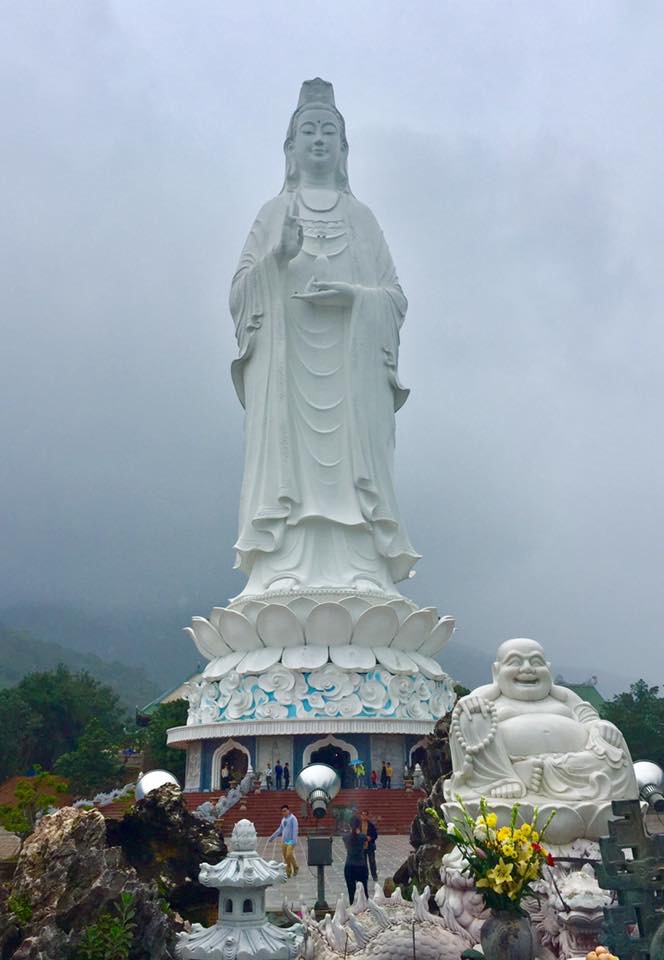
Today, we further explored Da Nang. We first visited the Linh Ung Pagoda, home of the largest statue in Vietnam, the Lady Buddha. This beautiful statue is located at the top of a mountain that faces the South China Sea. The view there is beautiful, serene, and peaceful. Afterwards we went to the Water Mountain. Millions of years ago, this mountain was underwater, just like the Appalachians. There are more than four different Buddhist temples and three caves along this mountain. We hiked nearly five hundred steps and through the caves to come out at the top of the mountain. We were greeted with another beautiful view of the ocean and the city of Da Nang.
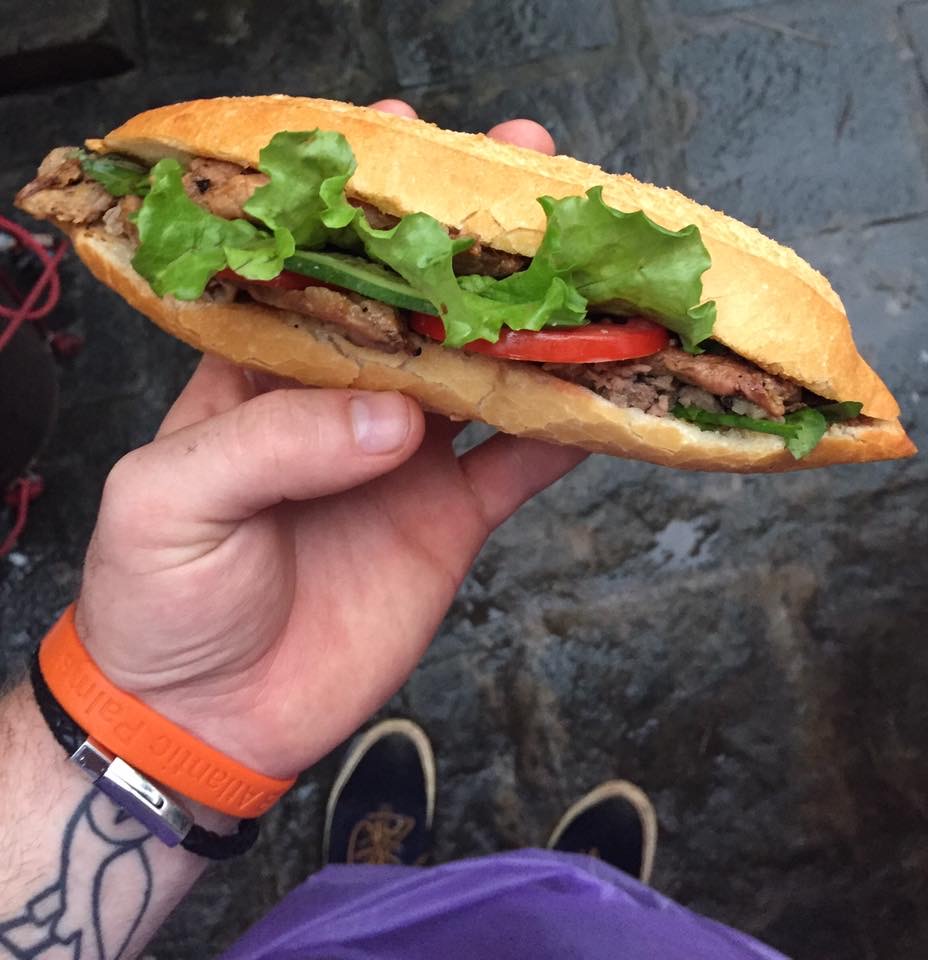
We took the bus back to our hotel for a nap and left Da Nang for the evening to go to a nearby city called Hoi An. This city was one of the largest ports of imported/exported goods in Vietnam. Because of this, it has been influenced by the French, Chinese, Japanese, and Vietnamese, as all of these cultures once met here at this port. The French made the streets too small for cars, and the city has refused to industrialize, so it is considered a “walking and biking city”. The streets are adorned with multi-colored Chinese lanterns, and in my opinion, this city is the most charming and cozy city that I have visited in Vietnam. We went to a local shop that makes the “World’s Best Bánh Mì”, as stated by the iconic journalist/chef, Anthony Bourdain. Of course, he was correct. We also tasted some of the local street food.
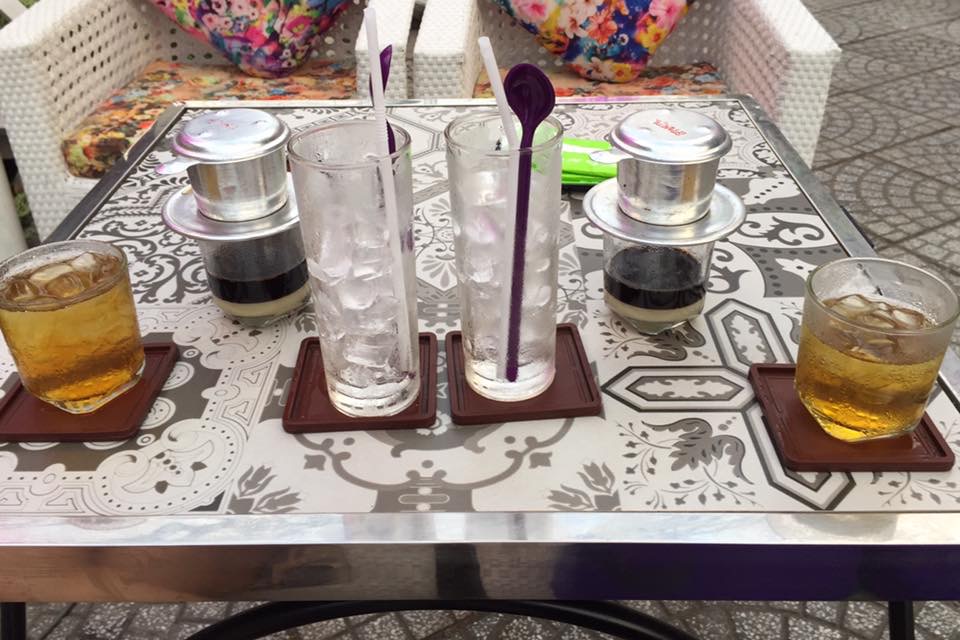
We left Hoi An and came back to Da Nang. We had Vietnamese coffee at a cafe. The coffee! I’m also surprised that I have made it this far without mentioning it. Vietnamese coffee isn’t your average American drip coffee. Vietnamese coffee comes from dark roasted beans and is brewed to be highly concentrated, with a similar consistency to motor oil. To balance out the strength, it is mixed with condensed milk and ice. Simply amazing.
At night, we explored Da Nang on foot. Da Nang is very charming at night with beautiful lights and decorations. The Dragon Bridge contributes to this. The Dragon Bridge is one of the most famous landmarks in Da Nang. It’s a modern six-lane bridge that is designed to look like a dragon. It lights up every night, and the head of the dragon breathes fire and water each Saturday and Sunday at 9 pm. Unfortunately, it was a Thursday, but the lit-up Dragon Bridge was still awesome to see. I ran into someone dressed as Pikachu who was selling candy suckers. I bought a sucker just to get a photo with Pikachu. We ended the night with another bowl of pho.
Days 9-12: December 30th, 2016 – January 2nd, 2017 – Ho Chi Minh City
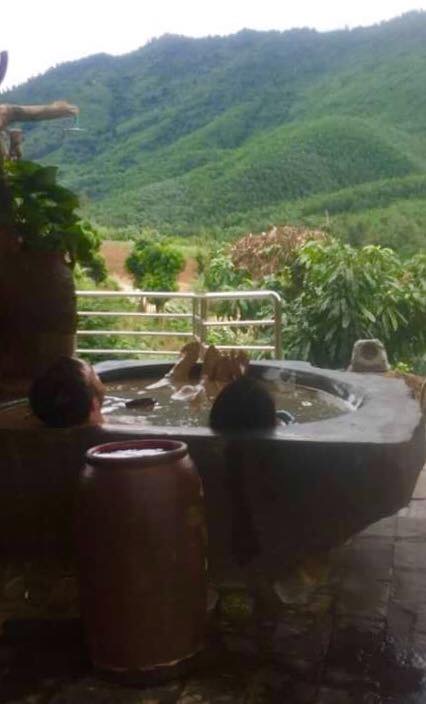
Before coming back to Ho Chi Minh City, we visited a four-star spa/resort in Ba Na Hills. The resort is beautiful. It’s built at the top of the green and lucious mountains, giving it a beautiful view. It has multiple natural hot springs. We took mud baths, had lemongrass and tea baths, enjoyed the sauna and steam rooms, and swam in the natural hot springs. After a relaxing day, we flew back to Ho Chi Minh City for the remainder of the trip.
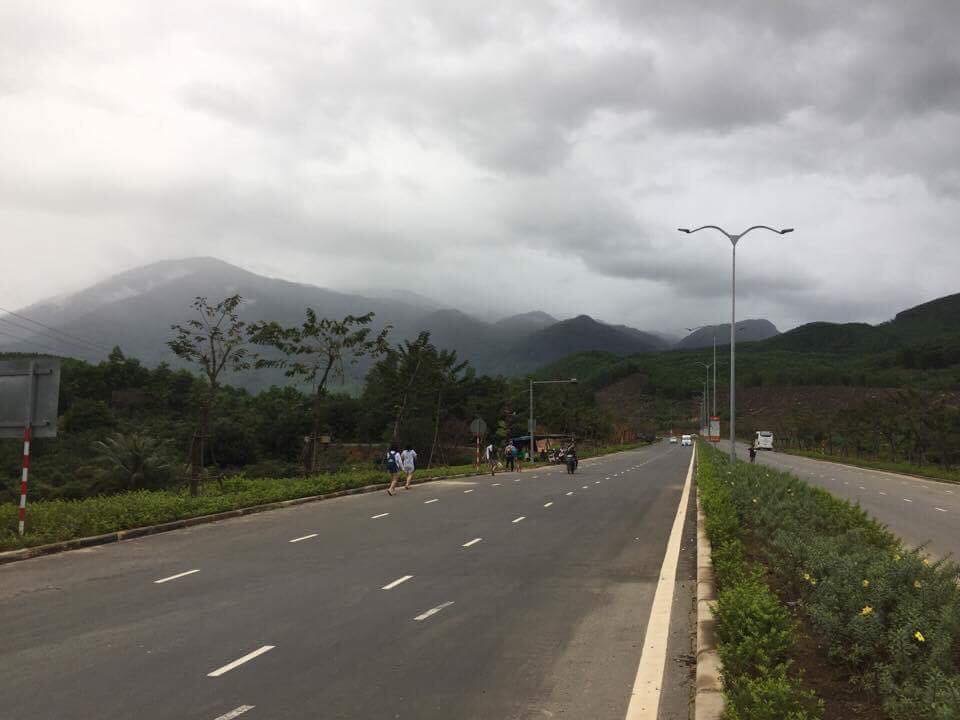
On New Year’s Eve, we took a taxi to District 1 for the annual New Year’s Eve Celebration. The city had a large concert with famous Vietnamese musical artists and put on a huge firework display at midnight to celebrate the New Year. There were thousands of people there, and the streets were packed beyond capacity. It was the Vietnamese version of “Times Square”.
For the last couple of days, we took it easy, spending time with her family and eating way too much. I made sure to get back to Pasteur Street Brewing one more time. My body had finally adjusted to the new time zone and weather. I had learned how to cross the street and how to speak some basic Vietnamese. I had found a new comfort zone, a new family, and a second home. Vietnam had forever changed me. I would never be the same again.
Leaving is always the hardest part, and I wasn’t ready. I wasn’t finished with Vietnam, and it wasn’t finished with me either. As I boarded the plane to return home, I knew that this was just the beginning. I would be back.
Connect with Digital Wax on Facebook, X, Instagram, Threads, and Bluesky.
About the Author:
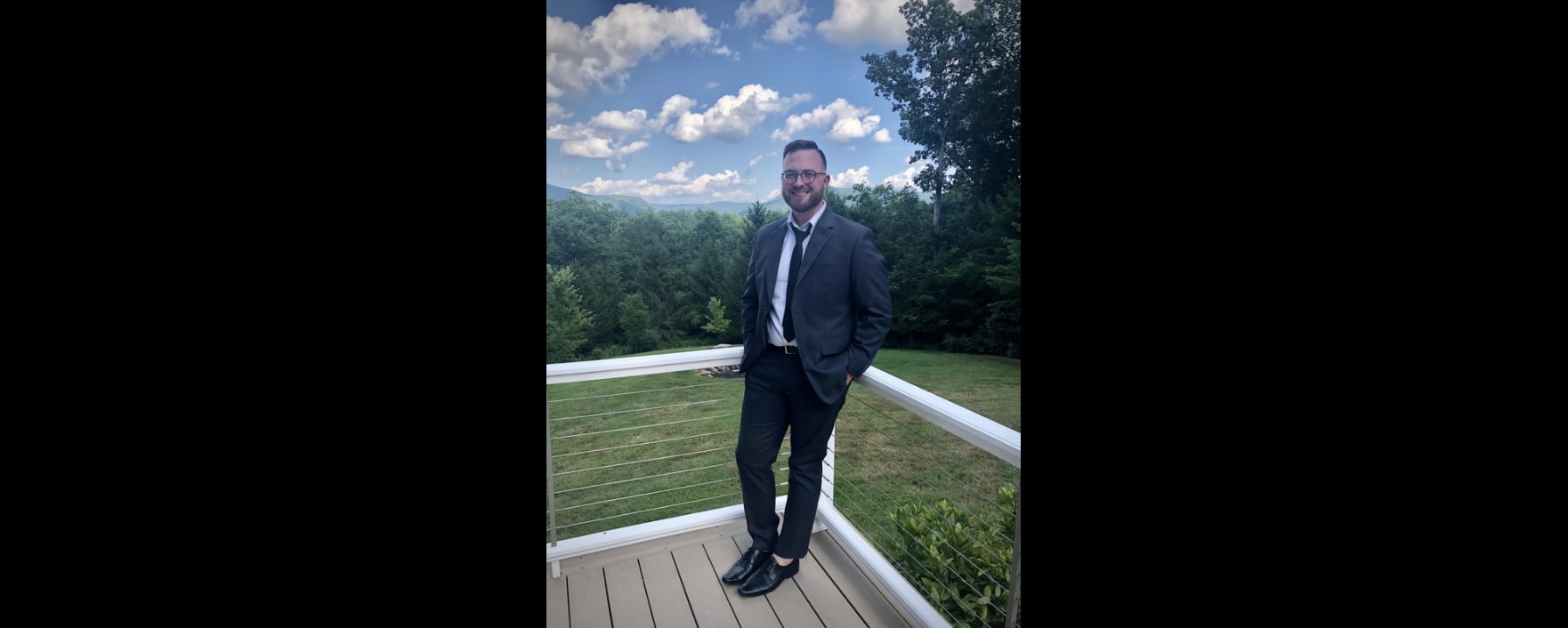
– Christopher Brown is a freelance writer for Digital Wax. He grew up in West Virginia and works primarily as a dental hygienist in Charleston. His wife tells him that he has too many hobbies; a musician, hip-hop head, football fanatic, beer brewer, frequent traveler, & master home chef.


 Digital Wax