BY: DIGITAL WAX MEDIA STAFF
Saxophonist Charlie Parker – known to many by his alias, “Bird” – has become an almost mythical figure since his untimely passing at 34. During his short life, Parker reshaped jazz as an art form through his pioneering work in what would come to be known as the bebop genre, ultimately altering the general perception of what was believed to be possible for musicians of all types.
The skill and influence of Charlie Parker have been propounded intently since his passing, with listeners marveling at the creativity and facility of the musician even today. But contrary to what one might glean from tales of the hard-living and general dishevelment of his later years, Parker arrived at his legendary musical ability by way of a steadfast commitment and ardent dedication to the development of his craft.
Receiving his first saxophone at the age of 11, Parker would soon commit wholly to a musician’s life, later dropping out of high school to pursue music on a full-time basis. Woodshedding furiously and, by his own estimation, committing “11-to-15 hours a day” at times to practicing on his saxophone, Bird had all but mastered conventional and traditional elements of jazz music by the time he was just 18. It was at this time he left Kansas City for New York to pursue his musical ambitions.
For all the profound revelations introduced by Parker with regard to melodic structure and harmonic possibilities, his rhythmic innovations would prove to be among the most impactful of his many contributions to the jazz lexicon. Deviating from the traditional approach to laying down horn lines, Parker’s distinct phrasing would provide the rhythm of bebop, giving shape to much of the vocabulary already in development by pioneering players such as Dizzy Gillespie at the time.
It was during this period in New York that Parker would shatter the traditionally accepted parameters for jazz soloists upon his realization that the notes comprising the chromatic scale could each be leveraged melodically to the end of resolution in any key. This made way for the utilization of pick-up notes and unconventional methods of leading into chord tones.
Parker’s expansion of the harmonic palette in the jazz format all but conjured an entirely new means of expression by way of performance and interpretation – or reinterpretation – of existing music. The innovations spearheaded by Bird would do more to legitimize and redefine the role of the instrumental soloist in jazz than any musician since Louis Armstrong in preceding decades.
The saxophonist’s status as a true artist – and as some would say, a creative genius – during his lifetime also helped to redefine the artistry of the jazz genre. Bird’s deep-rooted theoretical understanding of harmonics and rhythm lent an intellectual edge to his public persona as a – sometimes erratic – beacon of creativity. Thus paving the way the “individual” in jazz music, reinforcing the public’s perception of jazz musicians as cultured and studied members of a significant group within society, rather than simply as entertainers.
Then there was the spirit of Charlie Parker’s playing. Despite his innumerable feats of technical musicianship that would earn the musician legions of followers, Parker’s work on the saxophone was identifiable far beyond the complex rhythms and spiraling melodic cadences which seemed to flow through him almost effortlessly.
Charlie Parker grew up and developed his chops in Kansas City. As such, the Kansas City blues made an indelible impact on the way the young musician would approach his playing. The emotional pull of the blues can be felt in each individual note of Parker’s playing – even more so when the technical acrobatics are dialed back ever so slightly.
One tangible example of this “feel” is Parker’s playing on a session for the song “Lover Man.” Recorded in the summer of 1946 for Dial Records, the legendary jazzman was, by all accounts, in less than optimal condition for the session. He would speak out against the release of the recording, which he deemed unsatisfactory, to no avail.
But in spite of Parker’s own objections to the recording, the result offers a less frantic glance at the nuance of Bird’s playing. It also speaks to the immense musical ability of its lead artist in that such poignant and emotionally impactful melodic passages could be conjured by a human who has all but neutralized their own central nervous system. Naturally, Bird’s fans would give the recording significant attention. Among its admirers was another legendary figure within the genre, bassist Charles Mingus, who would propound the recording’s redeeming qualities during his lifetime.
Dial recordings such as “Bird of Paradise” and “Cool Blues” serve as more deftly executed examples of the distinctly rich and emotionally tinged saxophone tone for which Parker has become known in the years since his death.
Another technical aim of Parker’s may come as a surprise to some, particularly to those who are familiar with the musician primarily in relation to his virtuosity and dense rhythmic and harmonic inventions within the jazz lexicon. Parker himself would make note of an unyielding desire in all his artistic efforts to “play clean.” This verbiage speaks to the idea of effectively producing a musical note or sound with precision and well-developed technique – forgoing any form of unintended notes, unnecessary dissonances, and poorly articulated tonal expression.
Performing effectively and serving the music, it seems, far outweighed any desire to showcase a profound technical facility on his instrument or to win favor among those within jazz circles. This love of the form was reflected in Parker’s eclectic tastes as a listener, with the saxophonist reportedly consuming the works of composer Edgard Varese and country music singer Hank Williams with as much fervor as those of jazz giants such as Count Basie, Buster Smith, and Lester Young.
The innovations made by Charlie Parker during the musician’s short life have been nothing short of revolutionary in terms of revitalizing jazz as a means of artistic expression and in redefining the way musicians approach their craft in a general sense. Though he would pass away on March 12, 1955, at just 34 years old, the spirit and artistic impact of Charlie Parker very much remains alive and well. As they say – Bird lives.
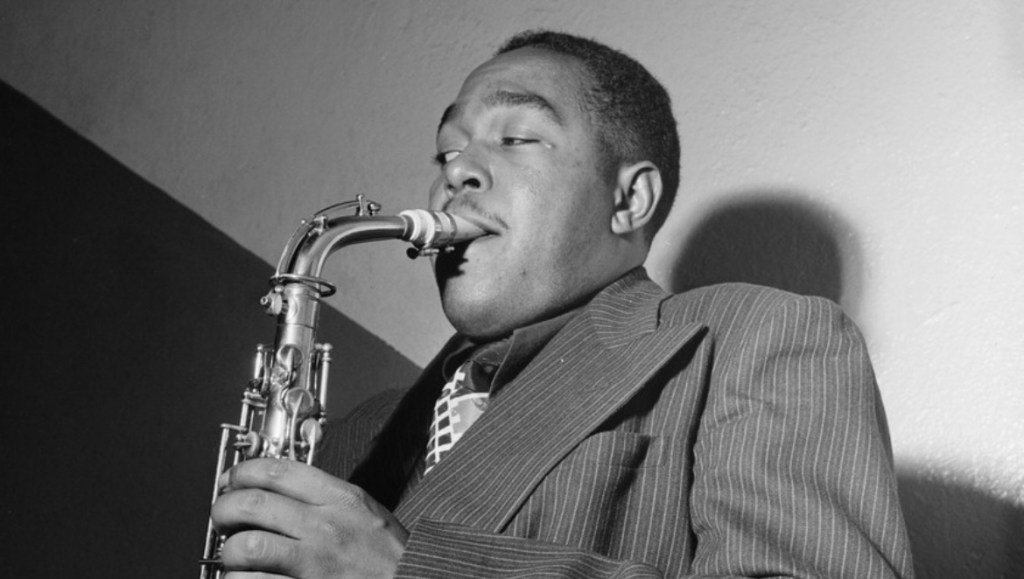
Photo: Portrait of Charlie Parker, Carnegie Hall, New York. N.Y., ca. 1947 by William Gottlieb – Public Domain, Library of Congress
Connect with Digital Wax on Facebook, X, Instagram, Threads, and Bluesky.


 Digital Wax