BY DIGITAL WAX MEDIA STAFF
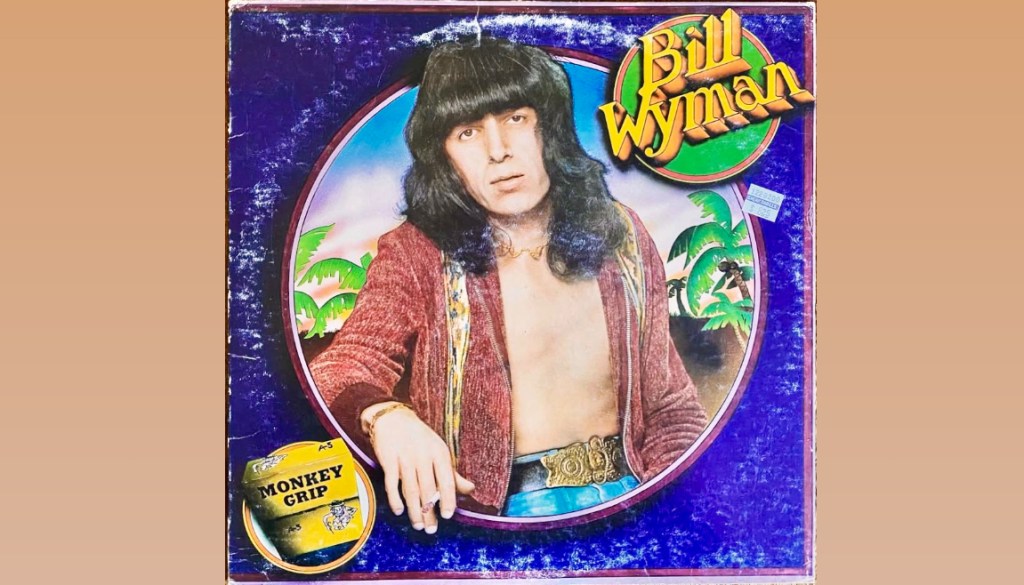
English musician Bill Wyman stepped out from the towering shadow of one of the biggest bands in the world to make his mark as a solo artist in the spring of 1974.
Released on the Rolling Stones’ own Rolling Stones Records, Monkey Grip offered fans a rare glimpse into the reserved bassist’s personal musical identity, aspects of which were removed from the blues-drenched rock for which the Stones were famous.
“I wanted to make a record that was a bit different from the Stones—something more personal and less about spectacle,” Wyman explained. As well as a side project, the recorded served as a focused effort to explore Wyman’s own musical tastes without the pressure of being part of one of rock’s biggest bands.
The sound of Monkey Grip diverges from the Stones’ bombast and swagger in favor of a leaner, groove-oriented style informed by heavyweight contributing sidemen like Lowell George, Dallas Taylor, and the great Leon Russell, Wyman drew from a variety of influences—reggae, blues, and soul—while keeping the arrangements minimal and direct.
“I wasn’t interested in flashy solos or overproduction,” he said. Instead, the bass lines lock into deep, infectious grooves that drive the songs with an understated confidence, showcasing Wyman’s strengths as a musician who understands the power of restraint.
Vocally, Wyman took on a new role, stepping into the spotlight in a way he hadn’t with the Stones. His singing on tracks like “Crazy Woman” and “Melody” is unpretentious and earnest, emphasizing narrative and mood over vocal acrobatics. “Singing was never my main thing with the Stones, but I wanted to give it a go here,” Wyman reflected, adding a layer of intimacy that sets the album apart.
Though Wyman’s delivery lacks the urgency and charisma of Rolling Stones bandleaders Jagger and Richards, it’s serviceable enough. The notion of Wyman up front is further supported in the bassist’s seeming awareness of his own strengths and limitations. He’s aware of what his lane is and he does little to deviate from that.
Monkey Grip opens with “I Wanna Get Me a Gun” – a tune which boasts a decidedly Rolling Stones title. What’s more, the gruff delivery of the line, “I wanna get me a gun and scare the shit out of everyone,” feels very Keith Richards. The track’s melodic movement feels close to what one could have expected from the Stones during this time, but the music itself feels much more polished and traditionally aesthetically pleasing. In short – it lacks the teeth of an Exile on Main St., almost certainly an intentional touch, though whether it ultimately serves or detracts from the listening experience is a matter of preference depending upon the listener.
Meanwhile, “White Lightnin’” delves into blues territory with a raw edge, underscored by Wyman’s rhythmic bass foundation and minimal but effective guitar work. True to its stylized moniker, the track weaves in some enticing country influences and dies a lot to provide the overall album experience with some sonic variety.
The de facto title track, “Monkey Grip Glue,” is a standout for its reggae-inflected groove, showcasing Wyman’s fascination with Caribbean rhythms during this period. The steady pulse of the bass anchors the track, while layered percussion and subtle melodic flourishes create a hypnotic effect. It’s a clear departure from the Stones’ typical sound and demonstrates Wyman’s willingness to experiment and embrace different musical landscapes.
The album’s production also reflects this ethos. Recorded primarily at Advision Studios in London, Wyman collaborated with producer Bill Shepherd, known for his work with The Bee Gees, aiming for clarity and warmth over studio trickery. The sessions were relaxed but purposeful, with Wyman assembling a tight group of musicians who shared his vision of groove and feel.
“The whole process was about capturing a mood, not showing off,” Wyman said.
Again, the production will speak to listeners in varying degrees of impact depending upon the ear of those hearing the record. The smooth, tight production could be considered pretty marketable and “safe,” by 70s standards, but it doesn’t date the experience in the way that production for later Stones work such as Under Cover of the Night and Dirty Work would.
Though Monkey Grip would fail to achieve commercial success on the scale of Stones records, it remains a compelling document of Wyman’s artistry outside the band’s framework. It reveals a musician who values subtlety, rhythm, and musical honesty—qualities that may be overshadowed in the larger-than-life context of The Rolling Stones.
In a career defined in no small part by supporting roles and collaboration, Monkey Grip stands as Bill Wyman’s statement of individuality: a personal, groove-driven album that continues to resonate with a select group of listeners as a result of its particular understated charm and historic connotations in the context of the Rolling Stones’ legendary career.
Connect with Digital Wax on Facebook, X, Instagram, Threads, and Bluesky.




 Digital Wax