BY: DIGITAL WAX MEDIA STAFF
Howlin’ Wolf’s “Smokestack Lightnin’” has become one of the most widely recognized standards in blues lexicon, having been covered by dozens of artists since its initial recording. But despite the litany of attempts from other artists to make the tune their own, there is simply no version that even comes close to emotional impact of the original from the big bad wolf himself.
Though it would gain recognition based on the 1956 studio recording for Chess Records, Howlin’ Wolf had been performing “Smokestack Lightnin’” for over two decades by the time he committed it to tape at 46 years old.
This approach was indicative of the blues tradition, as many blues musicians retrospectively renowned in the present day struggled to even make ends meet at the height of their creative prowess. As such, very few of the individuals now considered musical geniuses had the luxury of strolling over to the studio to cut an idea for a song they just had.
Given such parameters, these creative concepts were developed on the road, taking shape by way of repeated live performances and catching traction through word of mouth. It is often said of new recording artists that they have their entire lives to write their debut album and less than a year to write the follow-up. The former is true in a sense for tunes like “Smokestack Lightnin,’” which were subject to decades of fine-tuning and detailing prior to their having been laid down to tape.
Appropriately enough, the subject matter of “Smokestack Lightnin’” lands dead center in the modus operandi of the blues. The track explores the unpleasant business of nursing an aching heart, and features a heaping helping of the distinct vocal moan which would come to, in part, define the blues style. Listeners are offered a fascinating glimpse at Wolf’s more delicate side by way of the song’s trademark falsetto passages, though these lighter moments are offset by Wolf’s signature gruff below during the opening of each stanza.
But more than a simple expression of hurt, “Smokestack Lightnin’” moves deeper into the psychology of the protagonist. It isn’t just the narrator letting the person they love know that they’ve deeply upset them, it’s an appeal for understanding and a plea for basic decency, as evidenced by the repeated, “don’t you hear me crying?”
It isn’t enough for the protagonist to know that the object of their affection is aware of their pain, they harbor a need to make heads or tails of this person’s line of thinking. “Do you not hear me? Do you not grasp the gravity of the pain you’ve caused? And if so, how are you still refusing to reconcile these behaviors?” – These are the sorts of sentiments being implied. It’s a cognitive dissonance that the narrator simply cannot live with.
Musically, Chicago blues legend Hubert Sumlin is the star here. A looping, deceptively simple guitar riff – by all accounts fine-tuned by Wolf himself until it was to his satisfaction – anchors “Smokestack Lightnin’”. This is the path maintained throughout the bulk of the song’s duration, and it’s that lack of variation that is indirectly responsible for the sense of variation throughout.
As convoluted as that sounds, it’s a structure upon which the blues was built – one that Mick Jagger and Keith Richards would happily adopt as a pillar of their own style in operating The Rolling Stones. The perceived consistent repetition sets up an expectation, which is thwarted by the smallest diversion in sound. This approach can offer a player the most bang for their buck, so to speak.
The inherently lonesome thematic nucleus of the track is accentuated by the pure blues harmonica stylings of Howlin’ Wolf himself, lending the proceedings a longing sensibility that is not that far off from the great Hank Williams.
Howlin’ Wolf is undoubtedly one of the best to ever do it. Wolf is as essential to the history of the blues as is Bob Dylan to folk-rock. If it is “Smokestack Lightnin’” for which the blues icon is best remembered by members of the general listening public, then it is just as fitting an approximation as any of the musician’s unassailably quintessential contributions to the blues lexicon and to popular music as a whole.
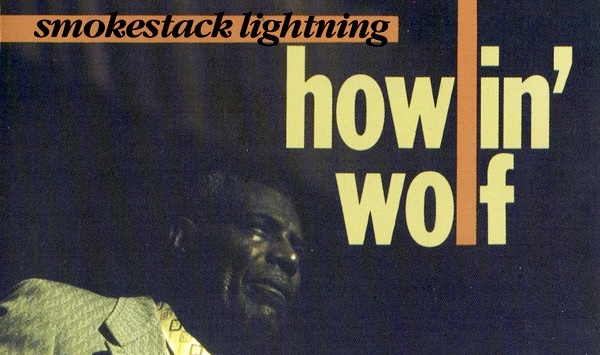
Howlin’ Wolf – Smokestack Lightnin’ Artwork; Fair Use
Connect with Digital Wax on Facebook, X, Instagram, Threads, and Bluesky.



 Digital Wax