BY: DIGITAL WAX MEDIA STAFF
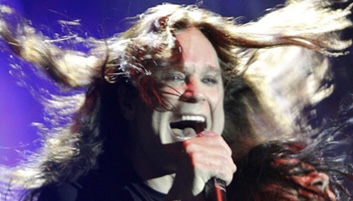
This week we lost the great Ozzy Osbourne – one of the greatest vocalists in history, bar none; a man whose singular nuances are so heavily embedded in the DNA of rock music as we know it that it’s difficult to separate to separate him from the form itself, not that anyone would ever need or want to. Ozzy’s reputation precedes him, so we need not harp on his accomplishments and enormous musical and culture significance. Let’s jump right in, shall we? These are three tracks celebrating the almighty Prince of Darkness, Ozzy Osbourne.
“The Writ”
Black Sabbath
Sabotage
1975
Sabotage is viewed by some as the last great album of Black Sabbath’s initial run with Ozzy on vocals. The band’s string of releases from its self-titled debut to 1973’s Sabbath Bloody Sabbath was remarkable in its quality and consistency. It was a run rivaled at the time perhaps only by Sabbath contemporaries and fellow innovators, Led Zeppelin. By mid-decade, however, cracks had started to appear in the metal monument that was Black Sabbath. Between drugs, pressure, fatigue, and managerial issues, tension was high and ideas were low when the band set about recording Sabotage.
The mounting problems aren’t necessarily as evident in the final product though. Many listeners categorize the album alongside definitive classics from the band like Paranoid and Master of Reality. The album closes with “The Writ,” an ambitious undertaking spanning multiple sections and stylistic colors.
The track features one of Ozzy’s most impressive vocals. The then 27-year-old Prince of Darkness soars over a gnarly B5–A5-F# progression, stretching to the lengths of his vocal range. “The Writ” includes what is one of the most metal lyrics ever in a couple of variations: “Are you metal? Are you man?” And, the second time around: “Are you Satan? Are you man?
What’s more, “The Writ” is one of those rare Sabbath tunes with lyrics penned by Ozzy himself. Bassist Geezer Butler was general known for crafting song lyrics for the band, but Ozzy stepped up to show that he was plenty capable himself. But more than anything, he used the opportunity to take an array of lyrical jabs at the band’s former manager, with whom they had been involved in an ugly legal dispute.
The addition of more experimental recording techniques – such as Bill Ward’s beloved reverse cymbal, an extended intro section, and a softer excursion midway through – make “The Writ” a prog-lateral affair that retains its rock ‘n’ roll teeth.
“Bark at the Moon”
Ozzy Osbourne
Bark at the Moon
1983
The Jake E. Lee era of Ozzy’s career seems to be an outlier of sorts in the scope of the overall catalogue. Rising from the ashes of his identity as Black Sabbath’s lead singer, Osbourne blasted back onto the scene, propelled by an album of killer new tunes and an unknown guitar wizard by the name of Randy Rhoads.
By the 1983 release of Diary of a Madman, Rhoads felt almost as essential a component of Ozzy’s solo career as did Ozzy himself. Suffice it to say it was a tough blow not only to Osbourne but also to his followers when the young genius passed away at the age of just 25. Virginians-born guitarist Jake E. Lee would be recruited for the insurmountable task of filling the shoes of the late virtuoso.
Like Rhoads before him, Lee would remain with Osbourne for just two studio albums – Bark at the Moon and The Ultimate Sin. Though incredibly inventive melodically and plenty capable, Jake E. Lee wasn’t necessarily theatrical in a way that would make him stand out amongst the Ozzy Osbourne Circus. Additionally, his tenure with Osbourne was sandwiched between that of Randy Rhoads and a player who would become arguably just as associated with Osbourne’s career as Rhoads – that of course being Zakk Wylde.
All this being said, both Bark at the Moon and The Ultimate Sin were excellent additions to the Ozzy discography. Bark at the Moon effectively bridged the gap between post-Sabbath Ozzy and the sound of the 1980s without losing the defining factors that made the material unique to Osbourne’s sound.
The title track is quintessential Ozzy. With a scathing, rapid-muted riff from Lee, “Bark at the Moon” paints a vivid picture of a classic horror tale, complete with an accompanying music video featuring the Oz man as a grizzly, blood- thirsty werewolf. These sorts of theatrics have been right up Osbourne’s alley since the very beginning. In fact, “Bark at the Moon” functions almost as a sequel of sorts to the classic Sabbath tune, “Iron Man.” In both, Ozzy embodies a misunderstood outcast who is isolated for an extended period before making a grand return to exact revenge upon and prove wrong all those who doubted him. Violence, emotional arc, redemption, revenge, WEREWOLVES?? There’s nothing not to love here. Not to mention Jake E. Lee absolutely scorches during his solo sections. “Bark at the Moon” is essential.
“Perry Mason”
Ozzy Osbourne
Ozzmosis
1995
After teasing retirement, Ozzy Osbourne emerged in 1995 with Ozzmosis. With Wylde and Sabbath bassist Geezer Butler in tow, the album would prove to be another transitional project for the rocker, who by this time was already considered a veteran by most and over-the-hill by some.
The resulting project drew varied reactions depending on who was listening. Producer Michael Beinhorn’s uber-meticulous approach to studio recording proved to be a point of contention for Osbourne. Members of the Red Hot Chili Peppers would have similar gripes regarding their working relationship with the producer a decade prior. Critics would also be wary of the hyper-produced aesthetic of Ozzmosis, with many reviewers noting a lack of soul in the end result.
Still, there were some killer tunes to be found throughout Osbourne’s seventh studio release, and the production serves the material in places. “Perry Mason” in particular benefits from the clarity and separation of instrumentation. The punchy drums and thundering bass provide a fantastic foundation for a hard-rocking yet overtly emotional and borderline desperate plea for truth and equity.
Thematically we get the story-song tinged with violence and mystery format that has served Osbourne’s material so well throughout his career. It’s less on-the-nose than something like “Iron Man” or “Bark at the Moon”, however. There isn’t necessarily a straight-forward narrative to be found in “Perry Mason.” Rather, it’s a vivid collage of imagery strung together in an attempt to gain answers or evoke some sort of understanding. In this sense, it’s sort of a spiritual counterpart to the classic Rhoads-era number, “Mr. Crowley,” which by Ozzy’s own admission finds the singer attempting to make heads or tails of what exactly was going on inside the head of the infamous occultist.
Photo: Ozzy Osbourne and Blasko by Harmony Gerber – Used under the Creative Commons Attribution 2.0 Generic license.


 Digital Wax